
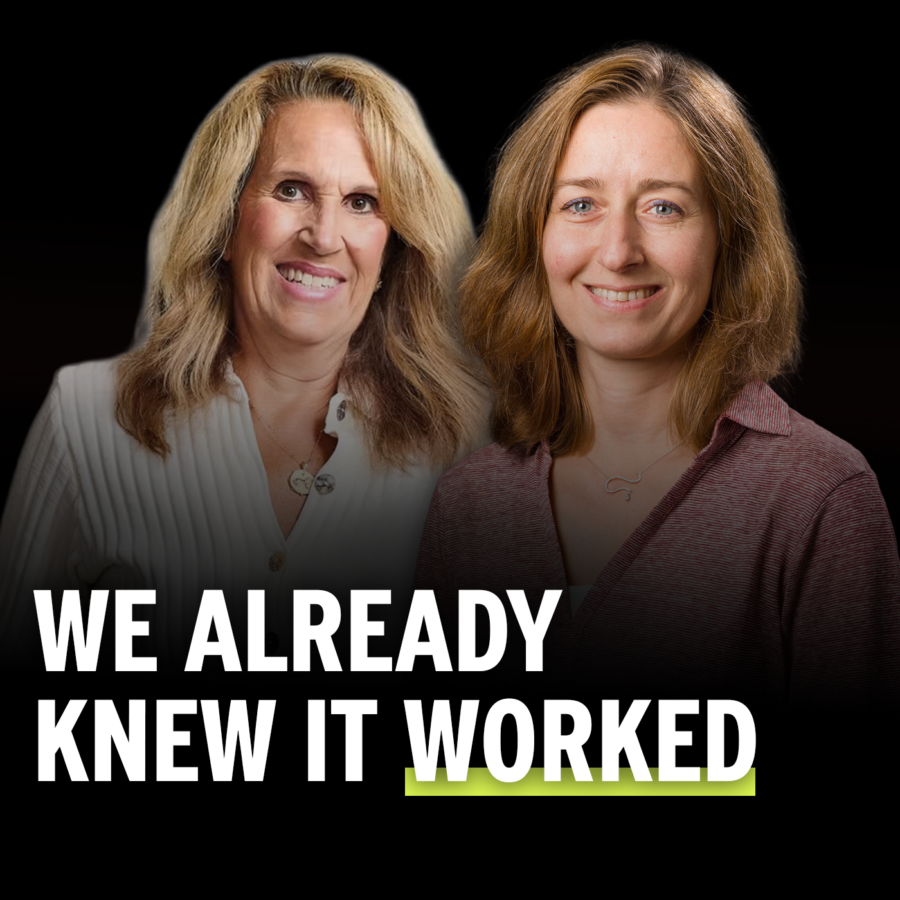
In this episode of the CrossFit Podcast, host Jocelyn Rylee sits down with Michelle Hespeler and Dr. Sule Tinaz of Yale School of Medicine to explore the science and lived experience behind high-intensity exercise for Parkinson’s disease.
Hespeler was diagnosed with Parkinson’s at age 40. A former physical education teacher, she began experimenting with structured, high-effort training long before exercise was widely discussed as part of Parkinson’s care. Tinaz is a neuroscientist and movement disorders specialist whose research focuses on how exercise affects the brain itself.
Together, they share results from a pilot study using MRI and PET imaging that showed increased dopaminergic signals after six months of high-intensity exercise. They unpack what those brain changes may mean, why effort matters more than perfection, and how exercise can improve movement, cognition, independence, and quality of life.
Topics Covered
- High-intensity exercise as a disease-modifying strategy for Parkinson’s
- Brain imaging evidence of exercise-driven neuroprotection
- Why effort and self-efficacy change outcomes in chronic disease
- How exercise compares to medication in Parkinson’s treatment
- Early warning signs, prevention, and environmental risk factors
Resources Mentioned
Community Highlight
Yvette Lepore has been fired for watching the CrossFit Games at work.
She’s worked 60- to 80-hour weeks, missed Christmas with her family, burned out in corporate America, and come back from a serious medical emergency that forced her to step away from her career.
Through all of it, she never missed a workout.
Not because she was chasing PRs, but because it was the one place she felt steady when everything else wasn’t.
Now she’s retired from corporate life, getting her Level 1, and stepping back onto the coaching floor so she can pay it forward.
Podcast: Play in new window | Download
Subscribe: RSS